United States | EN
 Canada | EN
 United Kingdom | EN
 German | DE
 France | FR
 Mexico | ES
 Japan | JA
 China | ZH

6 Ways to Improve Medical Grinding and Polishing
Why Grinding and Polishing Matters for Medical Manufacturing Automation is enabling both improved sample quality and throughput for quality critical manufacturing. The automation trend is aiding multiple industries. Often in highly regulated industries, such as in medical, automation need to meet or exceed the quality of production or testing while

How to Avoid Common Problems When Polishing with Colloidal Silica
Why Use Colloidal Silica for Final Polishing? Colloidal silica is an exceptional final polishing solution for a wide variety of different materials. It uses a mixture of chemical and mechanical polishing to improve removal rate whilst also reducing surface deformation, making it the polishing compound of choice for high quality

Titanium Metallography: A Guide to Sample Preparation
How to Section, Mount, Grind, Polish, Etch, and Analyze Titanium Samples for Metallographic Evaluation Utilized for their high strength-to-weight ratio, biocompatibility, and corrosion resistance titanium and its alloys are suited to many demanding applications. For these applications, it is important to validate sample properties and performance. Through Titanium metallography, the
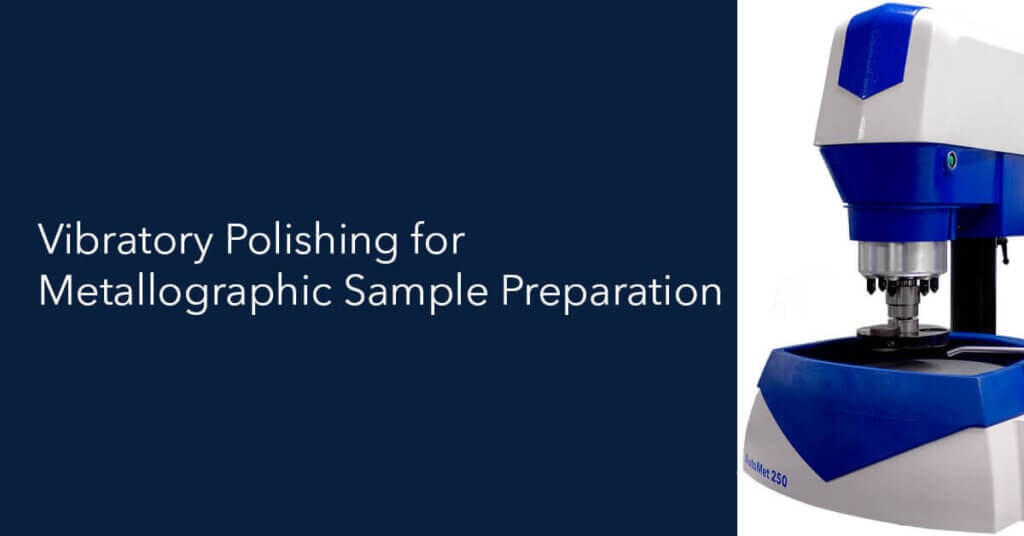
Vibratory Polishing for Metallographic Sample Preparation
Vibratory Polishing Machines Vibratory polishing is an advanced metallographic finishing technique that produces a deformation-free surface with minimal operator effort. It is widely used for applications requiring high-quality surface finishes, particularly where preservation of microstructural integrity is critical. It can be used on any material or combination of materials but
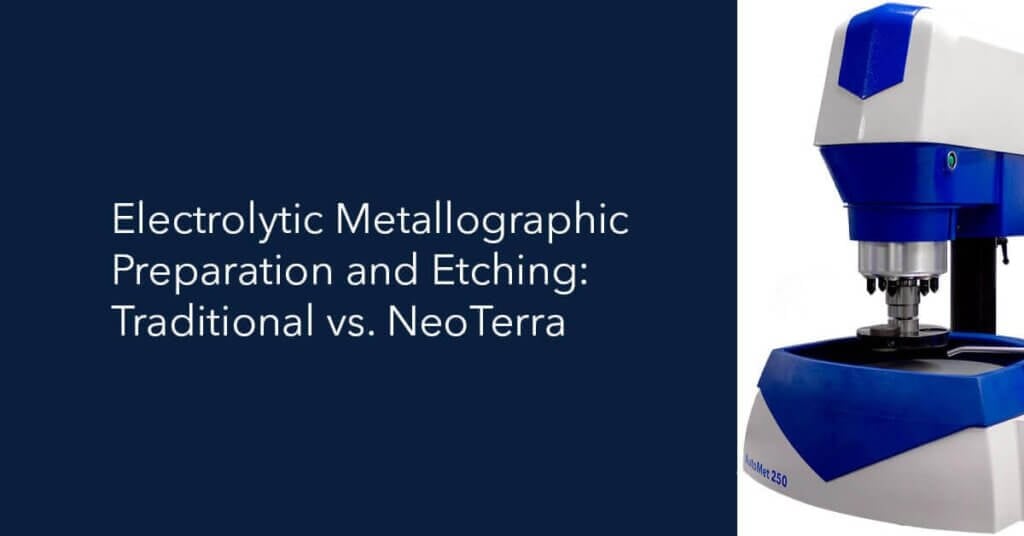
Electrolytic Metallographic Preparation and Etching: Traditional vs. NeoTerra
Historically, electrolytic polishing has been applied in metallographic process inspection, particularly for materials that are difficult to prepare using conventional mechanical or chemical methods, such as stainless steels and titanium. Soft metals also benefit from electrolytic techniques, as achieving high-quality mechanical polishing can be more challenging. Electrolytic approaches are typically
Colloidal Silica vs. Alumina for Metallographic Final Polishing
Final Polishing Final polishing suspensions are designed to remove the final layer of surface deformation. The removal of this deformation is essential for successful etching of sensitive materials and also when evaluating any sample with high magnifications, under polarized light or differential interference contrast, or for advanced analysis such as

View all Products in the Buehler Product Catalog

Select a method by material

Search Buehler's Safety Data Sheets

Browse and search Buehler's product literature