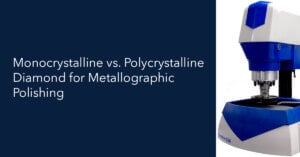
Diamond is routinely used for the preparation of most materials due to its high removal rate and low deformation depth. They are available in a wide range of micron sizes and two main diamond types. The micron size needed is determined by the material and end analysis goals.
Diamond types (Monocrystalline vs Polycrystalline)
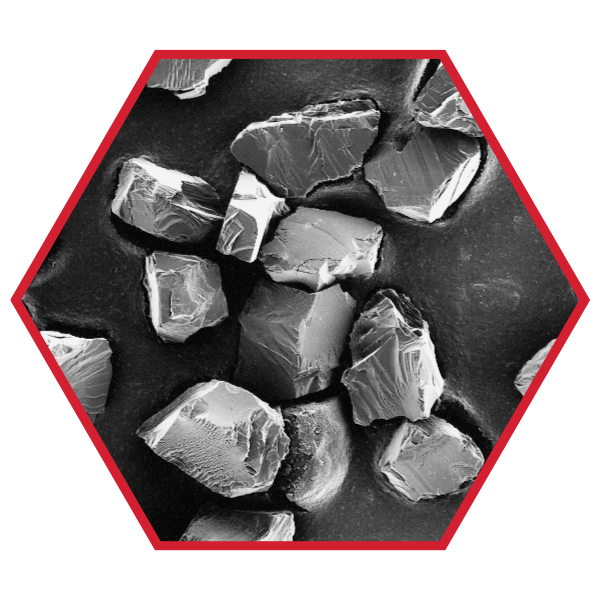
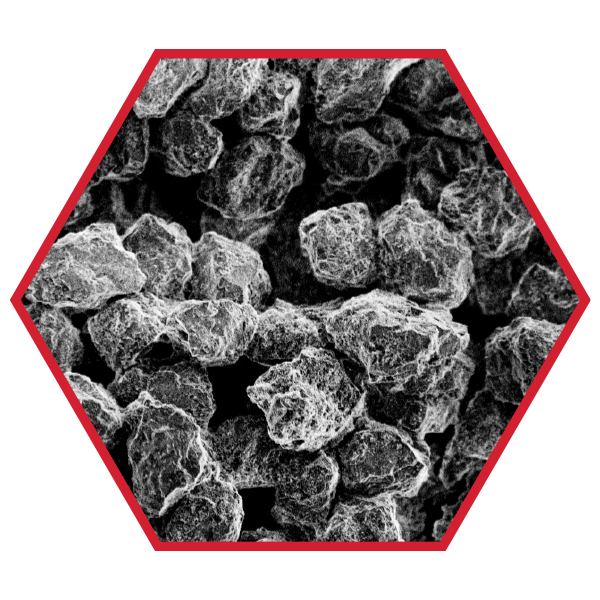
Material removal rate directly impacts the speed of each process step. A higher removal rate means moving on to the next step more quickly, allowing faster analysis and increasing throughput. Because of its multi-faceted shape, polycrystalline diamond removes material faster and produces less deformation than monocrystalline for ductile materials. The fewer facets on monocrystalline diamond make it best suited for preparing very hard materials such as ceramics. Always look for diamond suspension developed with strict quality control for particle size and shape to get a reproducible finish.
MetaDi | Monocrystalline
Cost effective
Sharp, blocky particles
Best for ceramics
MetaDi | Polycrystalline
Faster preparation times
Reduced deformation
Only small amount needed for high quality polish
Monocrystalline vs. Polycrystalline Diamond for Metallographic Polishing FAQs
What is the difference between Monocrystalline and Polycrystalline Diamond Suspensions?
Material removal rate directly impacts the speed of each step. A higher removal rate means moving on to the next step more quickly, allowing faster analysis and increasing throughput.
Because of its mutli-faceted shape, polycrystalline diamond removes materials faster and produces less deformation that monocrystalline.
Manual vs. Semi-Automatic Metallographic Grinding and Polishing
Metallographic grinding and polishing machines are available in manual and semi-automatic configurations. This guide compares manual vs. semi-automatic grinding and polishing methods, including specimen manipulation, central force, and individual force preparation.












 United States | EN
 Canada | EN
 United Kingdom | EN
 German | DE
 France | FR
 Mexico | ES
 Japan | JA
 China | ZH