United States | EN
 Canada | EN
 United Kingdom | EN
 German | DE
 France | FR
 Mexico | ES
 Japan | JA
 China | ZH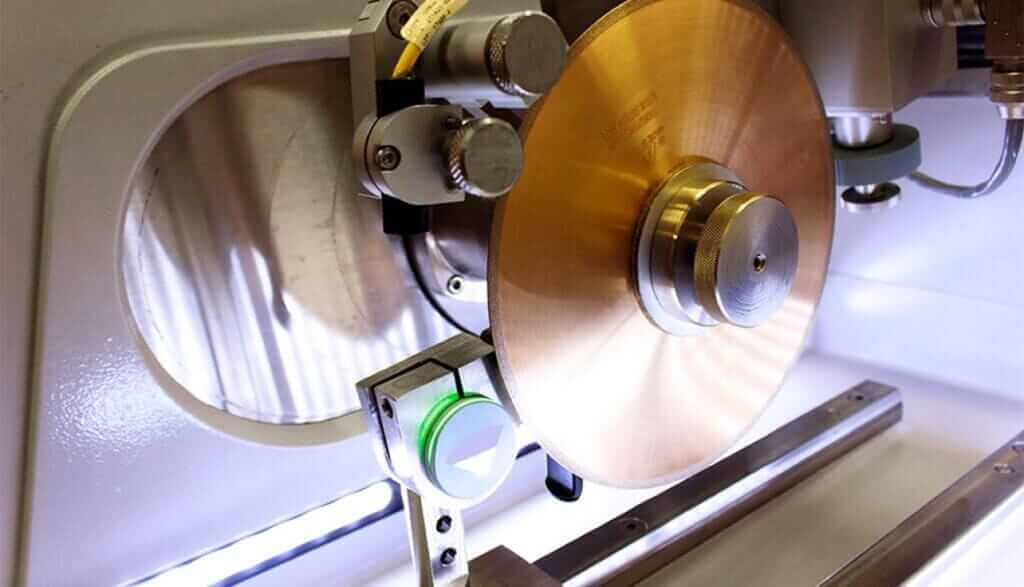
Introduction
Sectioning of electronic components for quality control or failure analysis can be challenging as care must be taken to ensure the true structure is revealed, free from preparation-induced artifacts. Historically, sectioning processes that were highly damaging to the sample were used, which could induce artifacts that could easily be misinterpreted as manufacturing defects or service failures. To avoid this, sectioning needed to be carried out well away from the region of interest (ROI), and long grinding and polishing stages were required to recover induced damage.
Background
Historically, the four most common methods of sectioning have been by punch, router, bandsaw and precision saw; each having their advantages and drawbacks. Punch and press are quick but are limited by coupon size and can cause significant deformation strain on multi-layer boards. Routers and bandsaws can be set up to handle varied sized parts but can cause heat, act aggressively towards populated boards and cause shear strain on multi-layer boards. Precision cutting significantly reduces damage but can be limited by the size of board and historically required slower sectioning of parts compared to the previously discussed methods.
To read the full SumNote you can find it on the buehler.com SumNote!