United States | EN
 Canada | EN
 United Kingdom | EN
 German | DE
 France | FR
 Mexico | ES
 Japan | JA
 China | ZH
History of Hardness Testing

Early Hardness Testing Hardness, as applied to most materials, and in particular metals, is a valuable, revealing, and commonly employed mechanical test that has been in use in various forms for over 250 years. Certainly, as a material property, its value and importance cannot be understated, the information from a hardness test can complement and […]
Aluminum Metallographic Specimen Preparation and Testing

The following are our recommendations for preparing aluminum for metallographic specimen testing according to common characteristics. We will cover both the four step and five step methods for preparing aluminum as well as some helpful tips during specimen preparation and testing. Etching Aluminum is a soft, ductile metal. Deformation induced damage is a common preparation […]
Metallographic Polishing Abrasives

Polishing usually involves the use of one or more of the following abrasives: diamond, aluminum oxide (Al2O3), and amorphous silicon dioxide (SiO2) in collidal suspension. For certain materials, cerium oxide, chromium oxide, magnesium oxide or iron oxide may be used, although these the late 1920s, as Hoyt [7] mentions a visit to the Carboloy plant […]
Rockwell Hardness Testing
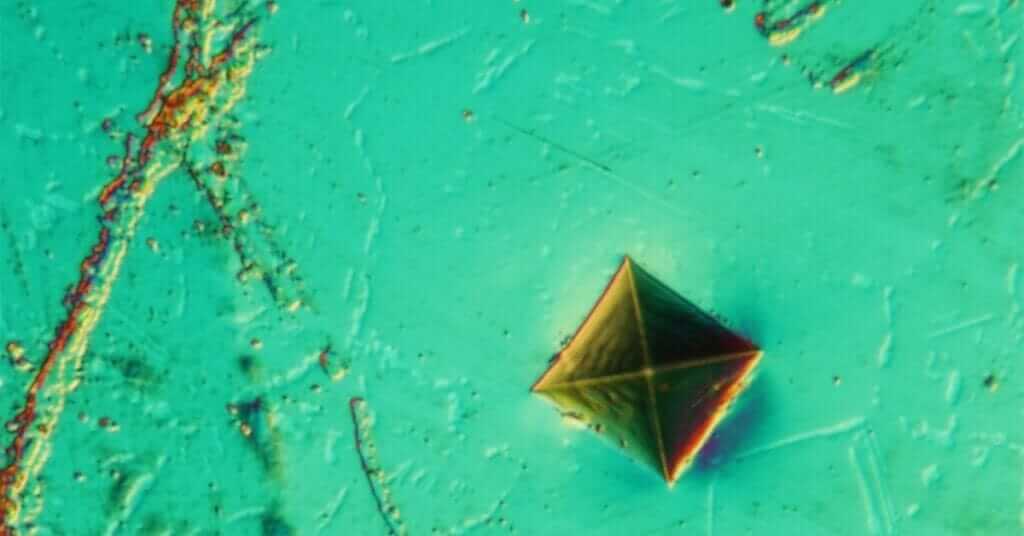
Rockwell hardness testing methods are defined in the following standards: ASTM E18 Metals, ISO 6508 Metals, and ASTM D785 Plastics. It is recommended that operators have a current copy of the relevant standards, which are updated regularly. The Rockwell hardness test is based on the measurement of the depth to which an indenter is forced […]